SealTrustSealTrustSealTrust
Home
How it worksVerifyDemo
Sign inSign up
SealTrust
HomeHow it worksVerifyDemo

Product

Digital Product PassportFeaturesPricingSolutionsRegulation radarUse casesIntegrations

Company

AboutCareersPressContact

Resources

BlogDocumentationAPI DocsDevelopersSecurityTrust CenterAll resources
Sign inCreate an account

© 2026 SealTrust

SealTrust

Product authentication through NFC and blockchain. Protect your brand against counterfeiting.

Product

  • How it works
  • Features
  • Pricing
  • Solutions
  • Regulation radar
  • Use cases
  • Integrations
  • Documentation

Company

  • About
  • Contact
  • Careers
  • Press

Legal

  • Terms of Use
  • Terms of Sale
  • Privacy Policy
  • Legal notices
  • GDPR
  • Cookie Policy
  • Return & warranty

Resources

  • All resources
  • Technical documentation
  • Blog
  • Digital Product Passport
  • DPP 2027 Guide
  • Developers
  • Verification badge
  • Security
  • Trust Center
  • API Docs
  • Help
  • Support

EN 18219 · EN 18220 · ESPR-ready · GDPR

© 2026 SealTrust. All rights reserved.

Follow us on LinkedInMade with trust in France
HomeBlogCounterfeit perfume: a health risk you spray on your skin
Product safety

Counterfeit perfume: a health risk you spray on your skin

Nordine Bouchelia
Nordine BoucheliaFounder, SealTrust
·
July 18, 2026
·
6 min read
Counterfeit perfume: a health risk you spray on your skin
In this article
  • A booming trade, and a dangerous one
  • What ends up in the bottle
  • Authenticity you can check before the first spray
  • Sources
In this article
  • A booming trade, and a dangerous one
  • What ends up in the bottle
  • Authenticity you can check before the first spray
  • Sources

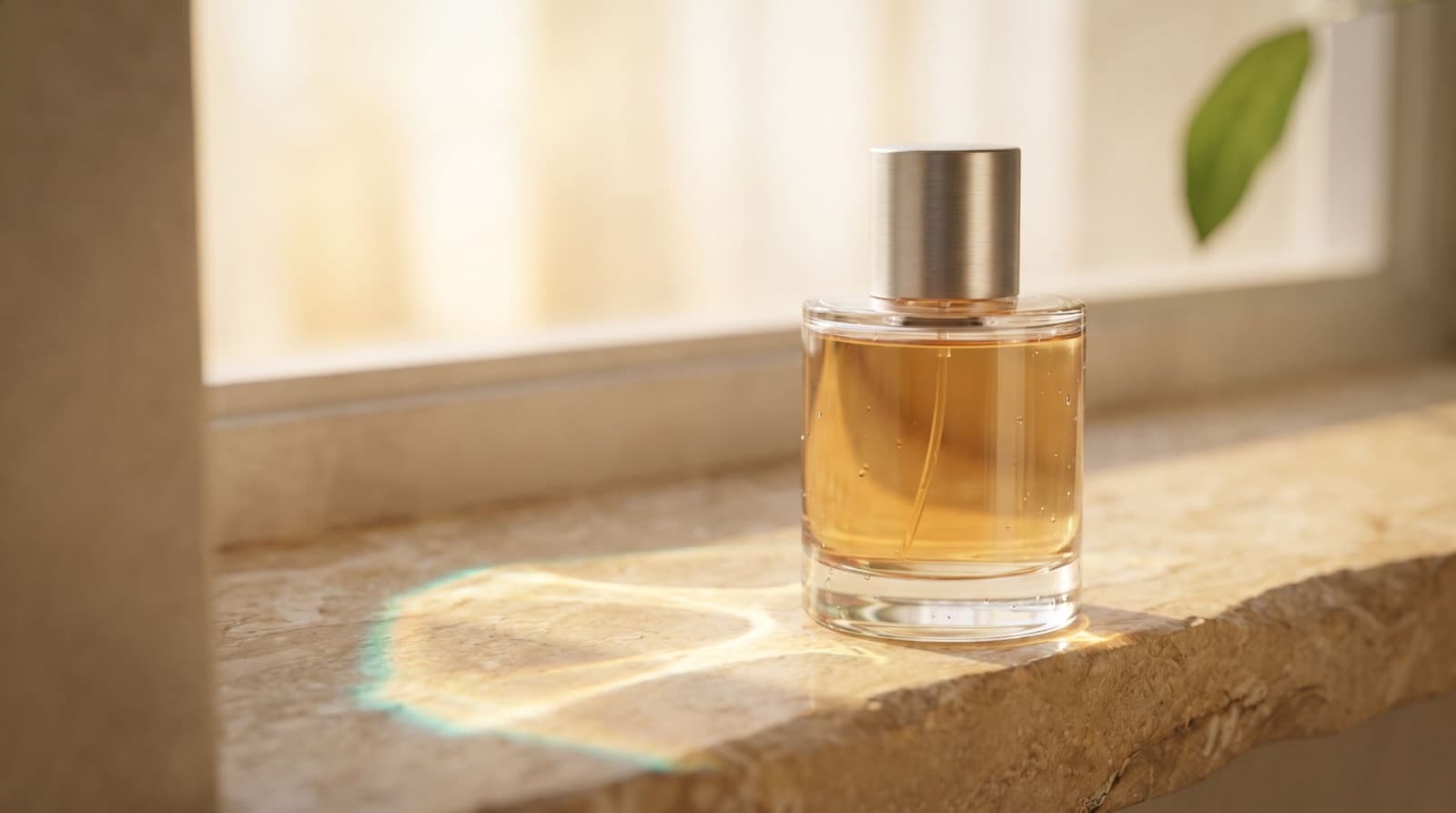
Counterfeit goods usually cost you money or pride. Fake fragrance and cosmetics are different, because the product ends up on your skin. A convincing knock-off handbag is an annoyance you notice later. A fake perfume can actually harm the person wearing it, and it is one of the counterfeits European regulators warn about most.

A booming trade, and a dangerous one

The scale is easy to underestimate. The OECD estimates the global trade in fake goods at around 467 billion US dollars. In 2024, European customs and market-surveillance authorities detained roughly 112 million counterfeit articles worth 3.8 billion euros, the highest value on record. And regulators keep pointing to the same danger: among all the fakes in circulation, cosmetics and fragrance are singled out as some of the most hazardous, precisely because they are used directly on the body.

Most of this trade has moved online, where it is far harder to police and where a counterfeit bottle can match the real one down to the box, the cellophane wrap and the batch code stamped on the base.

What ends up in the bottle

A weak, short-lived scent is the least of it. The real issue is what stands in for the regulated formula. Fakes are mixed with no quality control and nobody to answer for them, and testing of counterfeit fragrances by law enforcement and independent labs keeps turning up the same things: banned allergens above the legal limit, phthalates flagged as probable carcinogens, heavy metals, and contamination from production sites that meet no hygiene standard at all. Spray that on your skin day after day and a cosmetic quietly becomes a health problem.

Spotting it by eye is close to impossible. Today's best fakes, the ones people call super-fakes, copy the packaging so faithfully that looking harder gets you nowhere. What they still cannot copy is a proof of authenticity welded to the genuine bottle.

Authenticity you can check before the first spray

A printed seal or a hologram runs out of road here, because a skilled counterfeiter simply reproduces it. A cryptographic identity fixed to the physical object is another matter. With SealTrust, a bottle carries a secure NFC identity built on an NTAG 424 DNA chip, and that chip returns a fresh cryptographic proof each time it is scanned. One tap with a phone, before the cap ever comes off, tells the buyer whether the bottle is a genuine registered product or a fake.

  • Authenticity: a proof verified on every scan and anchored publicly on the Base blockchain, open for anyone to check.
  • Transparency: composition and origin carried in a Digital Product Passport attached to that same verified identity, in step with the European framework.
  • Reassurance: the customer confirms the product before it touches their skin, and the brand keeps a direct line to that customer.

For a fragrance house the damage runs past lost sales. Every fake puts the maison's name on someone's skin while nobody controls what is actually inside. Letting a customer confirm authenticity with a single tap protects that person first, and the name on the bottle right after.
Sources

  • OECD, Global trade in fake goods reached USD 467 billion (Mapping Global Trade in Fakes 2025)
  • European Commission, EU detains 112 million counterfeit items worth EUR 3.8 billion in 2024
  • FBI, Counterfeit Cosmetics and Fragrances (consumer health risks)

Newsletter

Receive our latest articles and guides directly in your inbox.

By subscribing, you agree to our privacy policy.

Related Articles

Continue reading with these articles on related topics.

Counterfeiting in 2026: Key Figures and Global Trends
Industry

Counterfeiting in 2026: Key Figures and Global Trends

Analysis of the latest data on global counterfeiting: a market estimated at up to $4.5 trillion including piracy, threatening every industry.

SealTrust6 min
Super Fakes: When Counterfeits Become Invisible to the Naked Eye
Industry

Super Fakes: When Counterfeits Become Invisible to the Naked Eye

A new generation of counterfeits is so accurate that even trained experts can't tell them apart. Here's what that means, and what to do about it.

SealTrust7 min
Counterfeit batteries: when a fake cell becomes a fire hazard
Product safety

Counterfeit batteries: when a fake cell becomes a fire hazard

Uncertified and counterfeit lithium cells are behind a worrying share of e-mobility fires. Why a copied safety mark proves nothing, and how a verifiable identity bound to each battery closes the gap the label leaves open.

Nordine Bouchelia6 min
Protect your products

Ready to secure your products with SealTrust?

Discover how our NFC + blockchain authentication solution can protect your brand and strengthen your customers' trust.

Request a demoBack to blog