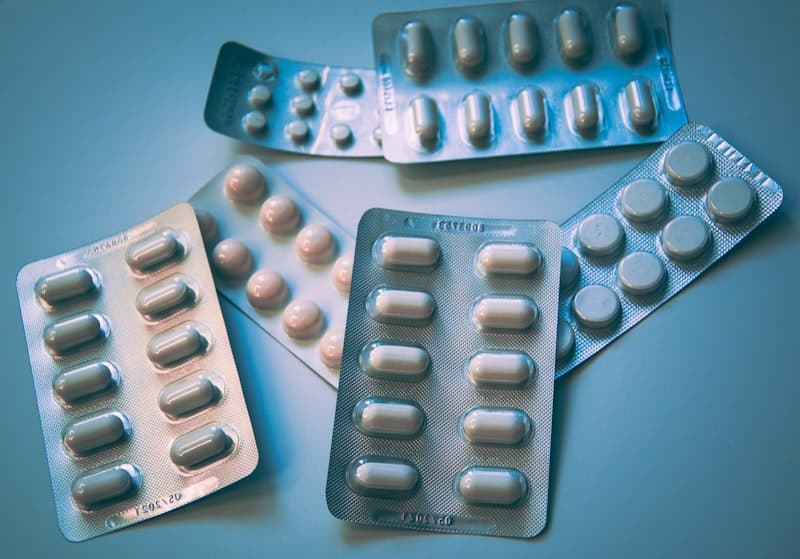
When we talk about counterfeiting, people usually think of fake handbags or knockoff sneakers. Annoying, sure, but rarely dangerous. Counterfeit medicine is a different story entirely. According to the World Health Organization, one in ten medical products circulating in low- and middle-income countries is substandard or falsified. The human cost: nearly 267,000 deaths per year from falsified antimalarials in sub-Saharan Africa. The global counterfeit medicine market has doubled in under a decade to surpass $200 billion. This is one of the most severe and underrecognized health crises of our time.
Regulation Has Improved, But Gaps Remain
Credit where it's due: the international regulatory response has strengthened considerably. In Europe, the Falsified Medicines Directive (FMD) has required systematic verification of each prescription medicine at the point of dispensation since 2019. The European Medicines Verification System (EMVS) now handles over 12 billion unique identifiers. In the U.S., the Drug Supply Chain Security Act (DSCSA) mandates unit-level serialization and electronic traceability from manufacturing to dispensation. India, Brazil, South Korea, Saudi Arabia, and Turkey have all implemented national systems.
And yet, the systems don't talk to each other across borders. Low-income countries, where the need is most acute, rarely have infrastructure to run them. And perhaps most critically: the patient, the person actually taking the medicine, is completely excluded from the verification process.
The Problem with Data Matrix Codes
Current systems rely almost entirely on 2D Data Matrix codes printed on packaging. Combined with GS1 standards, these codes encode a unique identifier, expiration date, and batch number. They work, to a point. But they have inherent vulnerabilities that criminals increasingly exploit.
A Data Matrix code is static printed information. Photograph it, reprint it, stick it on a counterfeit package. There's no dynamic response, no cryptographic challenge. Verification depends on querying a centralized database, which can go offline, suffer latency, or fail at cross-border interoperability. And reading the code requires a dedicated scanner or app that most pharmacies in sub-Saharan Africa, Southeast Asia, or Latin America simply don't have.
The cruel irony: regions where counterfeiting kills the most are exactly where verification tools are least available.
There's another dimension. Vaccines, insulins, and many biologics require strict temperature-controlled storage. A Data Matrix code says nothing about whether the cold chain was maintained. A vaccine that suffered a thermal breach can still have a perfectly valid code while having lost all therapeutic value, a scenario the COVID-19 vaccination campaigns made painfully real.
NFC Authentication Changes the Equation
A cryptographic NFC chip is fundamentally different from a printed code. It's an active cryptographic component. At every smartphone scan, it generates a unique, non-reproducible response using secure dynamic messaging: an encrypted message containing an incremental read counter and a message authentication code calculated from a secret key that never leaves the chip.
The verification server can confirm three things: the tag is authentic and not cloned, it hasn't been tampered with, and how many times it's been scanned, enabling detection of patterns that suggest counterfeiting attempts.
The transformative advantage is accessibility. Any modern smartphone with NFC, that's over 80% of devices sold since 2020, can perform verification in under two seconds. For a patient in Malawi, Bangladesh, or Peru, this is unprecedented. For the first time, the person actually taking the medicine has a concrete, immediate way to check if it's real.
The tags can integrate into blisters, vial caps, labels, or secondary packaging, at a thickness of just 0.3 mm. SealTrust scopes each deployment to the realities of generic medicines and public health programs, so authentication fits the program rather than competing with it.
Blockchain as the Trust Layer
NFC secures the physical link between object and identity. Blockchain provides the trust infrastructure for end-to-end traceability. Each registered medicine gets a non-fungible token whose on-chain record, frozen at mint, carries two fingerprints, one of the item and one of its passport, plus a status byte. Its category and brand are not written on the chain: they are mutable, and they live in the passport that the second fingerprint commits to. Its journey, manufacturing, quality control, shipping, distribution, dispensation, is kept in a timestamped event log, readable at scan and tied to that token.
What does the chain add over a database alone? Two things, and both are narrow. A date that cannot be moved: the item's fingerprint is written at mint, and the fingerprint of each published passport version is committed, shortly after publication, under a Merkle root written in a block, which proves that content existed no later than that block. The chain does not make the content true, and it does not freeze it: a corrected version becomes a new version, and the anchored one stays verifiable. A check that can be redone on the document itself: the roots sit in public blocks, so a party holding a passport version can hash it and check it against the root, using the proof served with the passport, rather than taking our word that nothing moved. Two things the chain does not do, and they matter here. It does not decentralise verification: the chip's cryptographic response is checked on our servers against a key they hold, and the passport is read through our API. And it does not hold the journey: manufacturing, quality control, shipping, distribution and dispensation live in a timestamped event log in our database, served at scan. Who reads what in the passport is set by tier: a reader with no account gets identification, compliance labels and consumer information; the repairer, recycler and upstream supplier tiers require an authenticated, accredited account; a market surveillance authority reads the whole document. Those tiers are our own defaults, reconfigurable field by field, and they are audiences with different needs, not rungs on a ladder.
Where It Matters Most
Antimalarials in sub-Saharan Africa. The region accounts for 95% of global malaria deaths, nearly 620,000 in 2022. Falsified artemisinin tablets with insufficient or no active ingredient kill untreated patients and promote drug resistance. NFC verification via smartphone, with offline cryptographic validation for areas with limited connectivity, offers immediately deployable protection.
Oncology medicines. Cancer treatments costing thousands of euros per unit are prime targets. Recent seizures revealed counterfeit batches of bevacizumab and sorafenib containing inert or toxic substances. NFC-blockchain verification can authenticate each vial at the point of administration.
Vaccines. The COVID-19 campaign exposed fragile supply chains: counterfeit vaccines seized in multiple countries, undetected cold chain breaches, traceability gaps. NFC tags on vaccine packaging would catch counterfeit batches before they reach patients.
Insulin. More than 100 million people depend on insulin worldwide. Exposure above 30°C progressively degrades efficacy without any visible change. NFC verification authenticates each box at the point of dispensation; it says nothing about how the product was stored.
The convergence of NFC hardware cryptography and blockchain traceability offers, for the first time, a verification system accessible to patients themselves, regardless of geography or infrastructure. For pharmaceutical companies, NGOs, and public health agencies, deploying these solutions is no longer a question of technology readiness. The tools exist. The question is how fast we choose to use them.