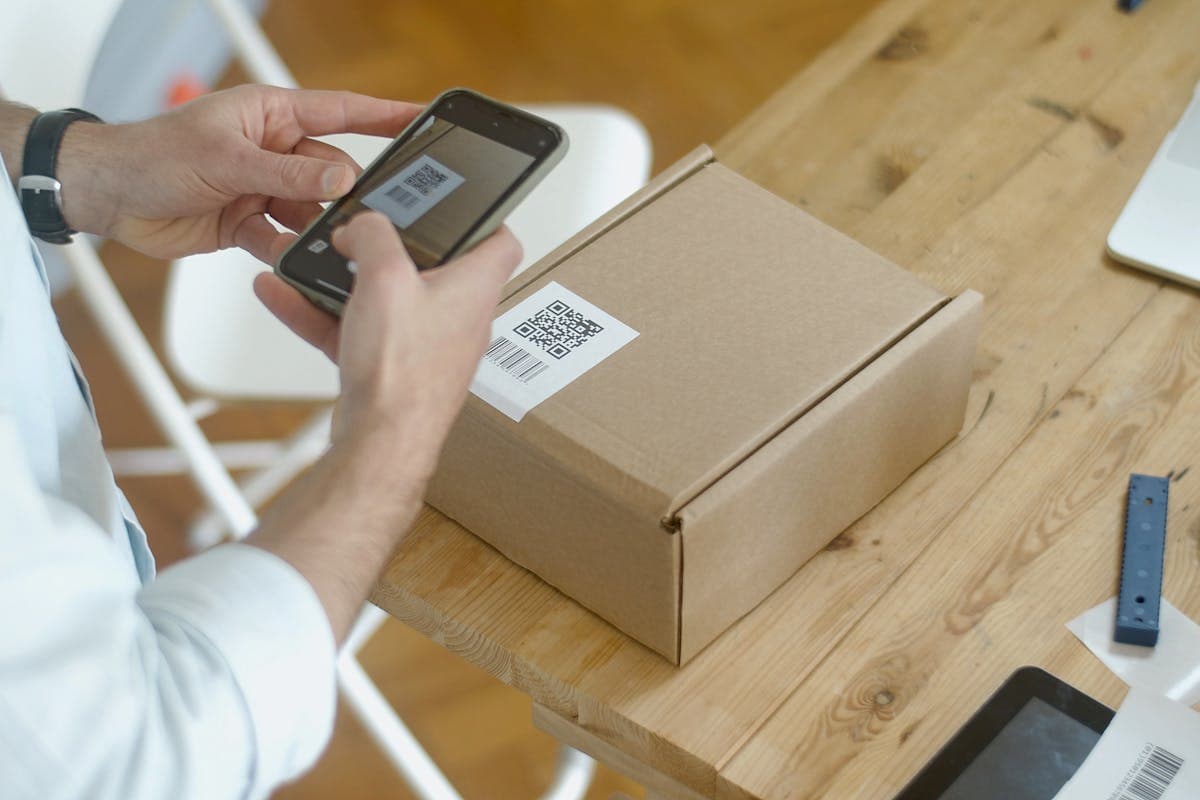
For product authentication, NFC with cryptographic chips (NTAG 424 DNA) is vastly superior to QR codes. QR codes are static printed images that anyone can duplicate with a photograph, so on their own they prove a link, not an object. NFC cryptographic tags generate a unique, encrypted response at every scan, making the tag clone-resistant. If your products have meaningful brand value and counterfeiting risk, NFC is the carrier we recommend.
That said, the two technologies serve different purposes. Here's a detailed, side-by-side comparison to help you make the right choice for your use case.
Head-to-Head Comparison
| Criterion | QR Code | NFC (NTAG 424 DNA) |
|---|---|---|
| Falsifiability | Trivially copied (photo/screenshot) | Response cannot be replayed (hardware crypto keys) |
| Dynamic content | Static: same data every scan | Dynamic: unique encrypted response per scan |
| Anti-clone protection | None | AES-128 Secure Dynamic Messaging + anti-replay counter |
| User experience | Open camera → frame code → tap link (3–5 sec) | Tap phone to product (under 2 sec, no app needed) |
| Durability | Degrades with wear, UV, moisture | 10+ year data retention, temperature/moisture resistant |
| Cost basis | Printing only | Delivered as a managed service, tailored to volume |
| Luxury perception | Visually intrusive (black/white grid) | Invisible: embedded inside the product |
| DPP compliance | Carries the unique product identifier the European passport registry expects. The battery regulation, the only one with a firm date, names the QR code (Article 13(6)) | Adds tamper detection on top of the carrier. The ESPR ranks no carrier and requires tamper resistance from none of them |
| Server-side validation | Optional (many implementations skip it) | Mandatory: every scan is cryptographically verified |
| Data per scan | URL only | Encrypted UID, read counter, authentication code |
When QR Codes Make Sense
QR codes are not inherently bad technology. They excel in use cases where authentication is not the goal:
Mass-market consumer goods and food. For everyday low-value items like a supermarket yogurt or a bottle of shampoo, cryptographic authentication isn't the priority. A QR code linking to product information, nutritional data, or recycling instructions is perfectly adequate when counterfeiting risk is minimal.
Marketing and engagement. QR codes work well for linking to promotional content, user manuals, warranty registration, and campaign landing pages. They're cheap to print, easy to update (by changing the destination URL), and universally scannable.
Event ticketing and one-time verification. When the "product" is consumed at the point of scan (like an event ticket), the static nature of QR codes is less of a liability. Combined with server-side validation, they provide adequate security for single-use scenarios.
The common thread: QR codes work for information delivery to low-value or single-use items. They don't work for proving authenticity of anything worth counterfeiting.
When NFC Is Essential
NFC becomes non-negotiable when any of the following conditions apply:
High product value. Luxury goods, fine jewelry, premium spirits, collectibles, any product where the retail price creates a counterfeiting incentive. On these products, authentication pays for itself against what a single counterfeit sale costs in lost revenue and brand damage. The return is immediate.
Anti-counterfeiting is a business requirement. If your brand loses revenue, reputation, or legal standing due to counterfeits, you need authentication that cannot be defeated by a camera. QR codes fail this test categorically. NFC with NTAG 424 DNA passes it.
Regulatory compliance (DPP). The ESPR sets no list of carrier requirements: the carrier is decided by each product group's delegated act, and none is published. The battery regulation, the only one with a firm date, requires a QR code (Article 13(6)). A QR-only passport is therefore compliant where a passport is required at all. NFC answers a different question, whether the object in your hand is the one the passport describes.
Secondary market protection. Products with active resale markets (luxury handbags, watches, sneakers) need authentication that transfers with the product and remains verifiable for years. NFC tags embedded in the product provide this. QR codes printed on packaging that gets discarded do not.
Brand experience matters. For luxury brands, the verification moment is a brand interaction. A smooth, invisible NFC tap that opens a branded verification page communicates premium quality. A QR code scan communicates grocery store.
The NTAG 424 DNA Advantage
Not all NFC chips are suitable for authentication. Standard NFC tags (like NTAG 213 or 215) store static data and can be cloned with inexpensive equipment. The NXP NTAG 424 DNA is purpose-built for authentication, and it's the chip at the core of SealTrust's solution. Here's what sets it apart:
AES-128 cryptographic engine. The chip contains a hardware coprocessor that performs AES-128 encryption on-chip. The secret keys live in a memory area that no chip command returns: they are used for the computation, they are not read back. AES-128 is a public standard, published by NIST as FIPS 197.
Secure Dynamic Messaging (SDM). Every time a smartphone taps the tag, the chip generates a fresh, encrypted response incorporating a message authentication code (MAC) computed from the chip's unique key, a read counter that increments with every scan, and optionally, encrypted data fields. The server verifies the MAC, confirms the counter has strictly increased since the last scan, and decrypts the data. A captured response is valid for exactly one interaction, replaying it triggers an immediate rejection.
Anti-replay counter. The monotonic read counter is written to non-volatile memory and cannot be rolled back. The server keeps, for each chip, the highest counter it has already accepted: a captured address that is played again carries a counter that has not moved forward, and it is refused. That is what separates a cryptographic chip from a static code, because a copy of one response is not the chip.
The Real Cost Equation
Comparing the two on tag price alone misses the point:
QR code: cheap to print, with no per-scan authentication. But zero anti-counterfeiting value, meaning the real cost of a QR-based "authentication" program includes the ongoing counterfeiting losses it fails to prevent.
NFC NTAG 424 DNA: cryptographic, clone-resistant authentication, delivered by SealTrust as a managed service. The chips are programmed from the console, on a workstation fitted with a contactless reader, and the platform verifies every scan, so there is no key infrastructure or blockchain plumbing for you to build or run.
Set against the value of the product it protects, authentication is a small line item, while the EUIPO estimates that luxury brands lose 15% of potential revenue to counterfeiting annually. The trade-off isn't close. SealTrust pricing is tailored to your volume; talk to our team for a figure built around your range.
The Verdict
QR codes and NFC solve different problems. If you need to link a product to a web page, QR codes are cheap and effective. If you need to prove a product is genuine (to consumers, to resale platforms, to customs authorities, or to a DPP compliance audit) NFC with NTAG 424 DNA is the only consumer-facing technology that delivers cryptographic authentication.
The question isn't really "NFC or QR?" It's "Do I need real authentication, or just a link?" If the answer involves counterfeiting risk, brand value, or regulatory compliance, NFC is the only serious answer.
Still weighing the options? Our demo kit includes both a QR-coded product and an NTAG 424 DNA-tagged one. Try to clone the QR code (it takes 5 seconds). Then try to clone the NFC tag. That's the demo. Request a kit.